

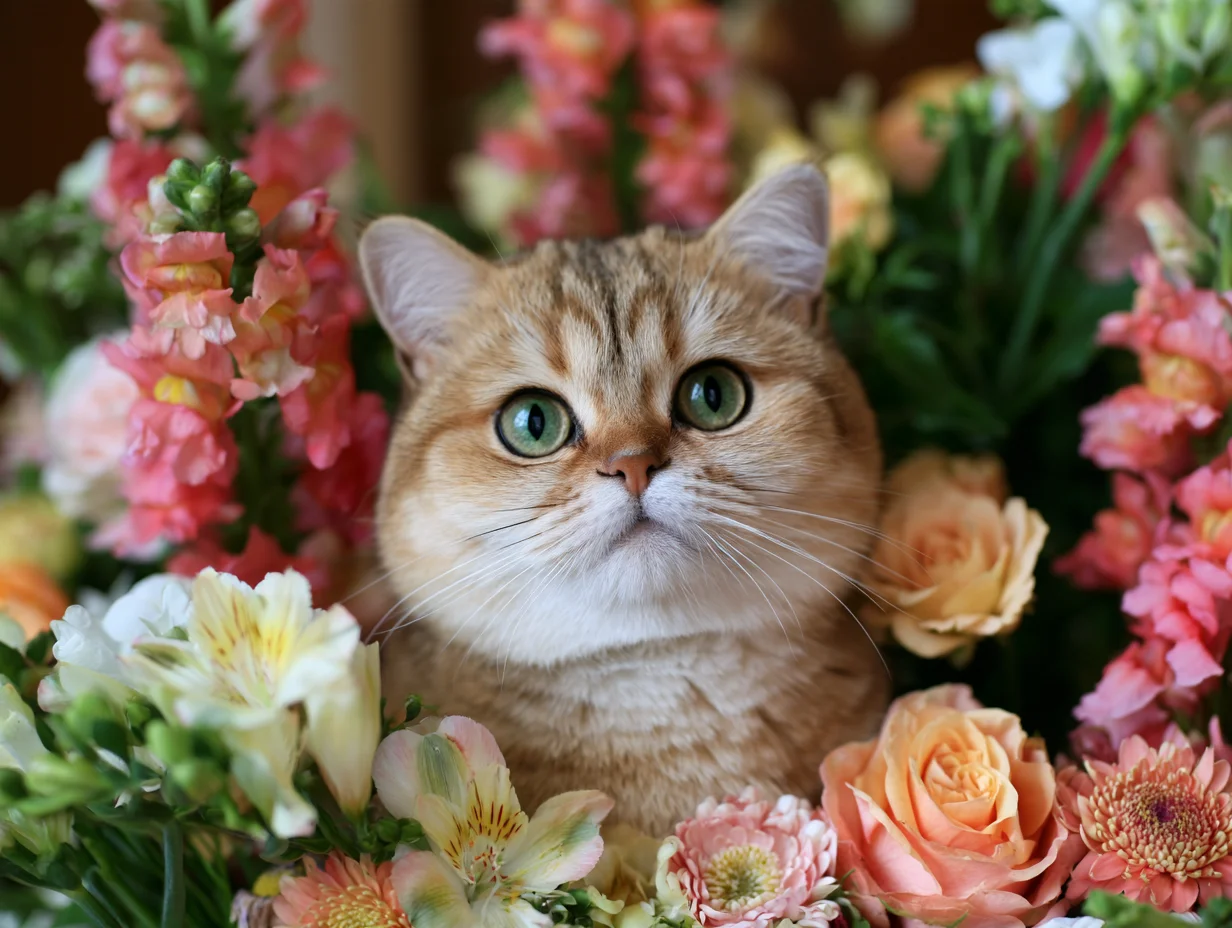
A simple safety checklist can help: confirm the plant’s identity, avoid all lilies, remove thorns from roses, and observe how your cat behaves around greenery. If the cat shows vomiting, drooling, lethargy, breathing difficulty, or any other unusual symptom, remove access to the plant and seek veterinary advice promptly. When uncertainty exists, provide the plant’s name or a clear photograph to the veterinarian or an animal-poison resource.
Before bringing any bouquet, cut flower, or houseplant into a home with cats, check every plant and decorative component. A label such as “cat-safe” generally means the plant is considered non-toxic if a cat touches it or nibbles a small amount. It does not mean the plant is edible or completely risk-free. Any plant material can irritate the digestive system when consumed in large quantities, potentially causing drooling, stomach upset, vomiting, or diarrhea. Individual cats may also react differently, so prevention remains the safest approach.
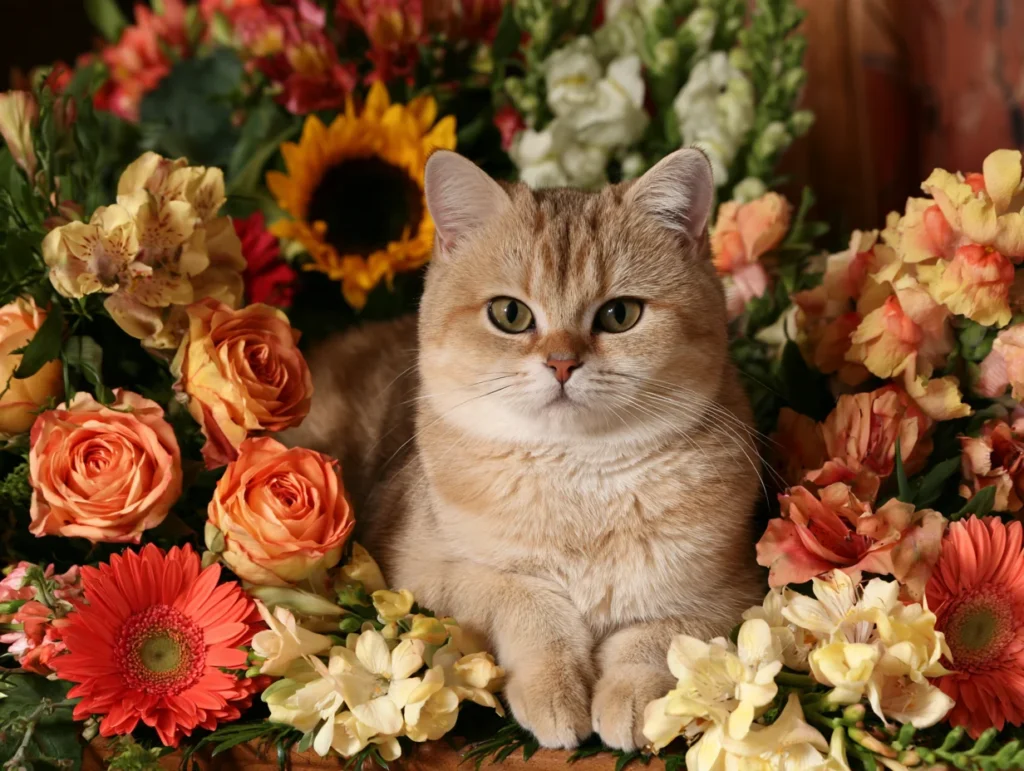
Arrangements require particular care because they can contain several species that are not identified on the main label. Greenery, filler flowers, floral preservatives in the water, pesticide residues, ribbons, wires, and floral foam may all create additional hazards. Before placing a bouquet within reach, identify every stem, leaf, and berry, and remove unknown greenery or decorative materials. Choose arrangements with clear plant labels, and ask the florist to confirm that each component is suitable for a cat household. Keep vase water inaccessible, especially when preservatives have been added.
Lilies should be excluded entirely from homes with cats. This warning applies to true lilies, including Asiatic, Easter, Oriental, and Stargazer lilies, as well as daylilies. Tiny amounts of the plant, pollen, or contaminated water can cause severe, potentially fatal kidney failure. Do not rely on removing the petals or keeping the bouquet in another room, because pollen can transfer to fur and be swallowed during grooming.
If a cat chews a potentially harmful plant, contact a veterinarian or an animal poison service promptly rather than waiting for signs to appear. Seek urgent advice if vomiting, diarrhea, lethargy, drooling, reduced appetite, or changes in urination develop. The sections that follow organize safer choices into three practical groups: flowers, bouquet fillers, and potted houseplants.
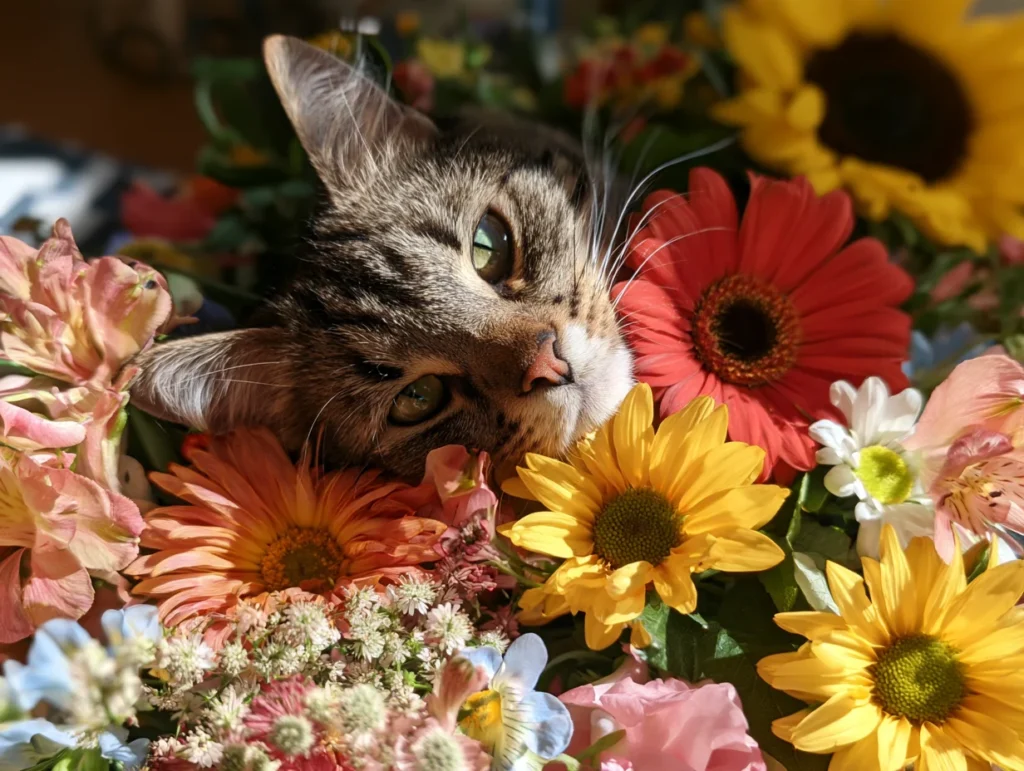
Fresh bouquets can brighten a home without creating unnecessary risks for a curious cat. Phalaenopsis orchids are a particularly elegant choice, offering long-lasting blooms in shades such as white, pink, purple, and yellow. They are considered non-toxic to cats, although chewing petals or leaves may still cause mild digestive upset. Sunflowers are another practical option. Their bright, sturdy flower heads suit cheerful arrangements, and they are not considered toxic to cats. Their firm stems also tend to hold up well in a vase, making them useful for informal displays and larger rooms.
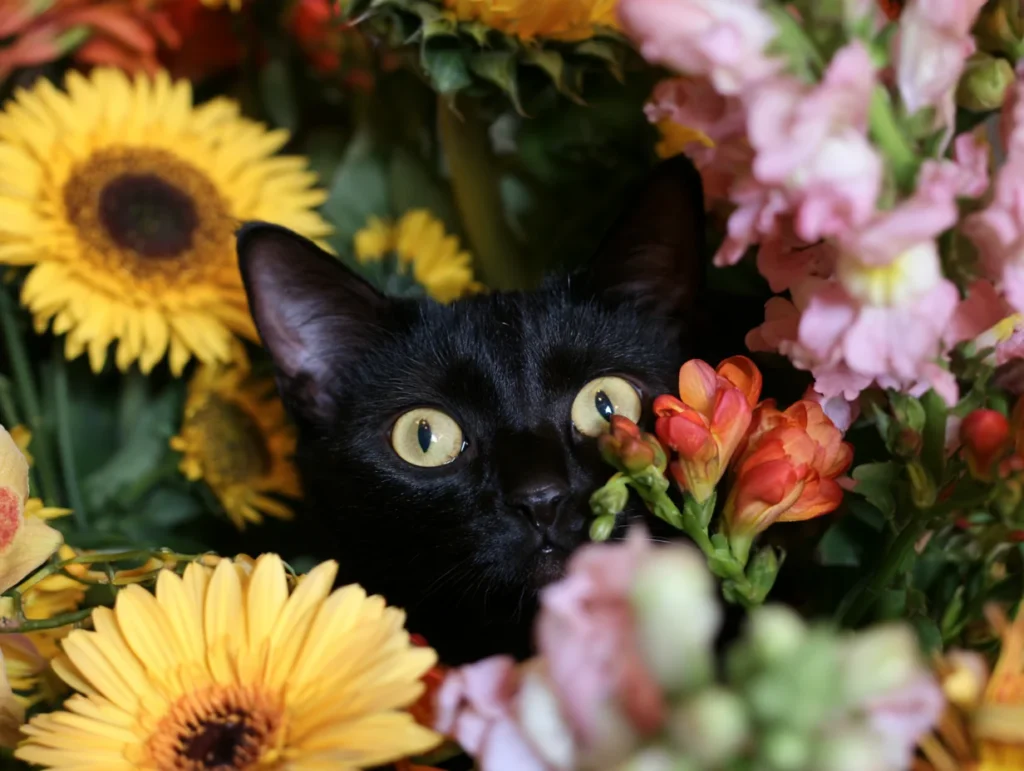
Gerbera daisies provide vivid color and a familiar daisy-like shape while avoiding the concern associated with some toxic flowering plants. They can be combined with sunflowers or used alone for a simple, lively arrangement. Snapdragons add a different visual effect: their tall stems, layered blossoms, and varied colors bring height and texture to bouquets. Although cats may investigate any accessible plant material, these flowers are generally regarded as suitable choices for homes where cats live. Selecting healthy, unsprayed stems is also sensible, since floral preservatives, pesticides, or other treatments may create risks separate from the plant itself.
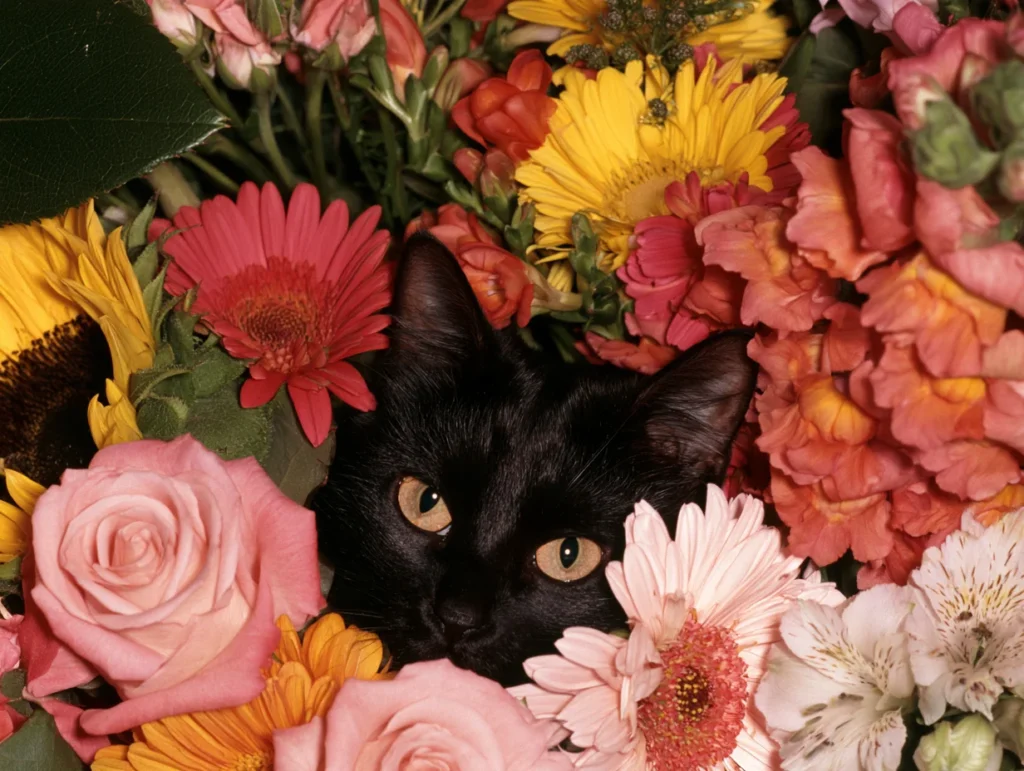
Roses are generally cat-safe, but their thorns require careful preparation. Remove every thorn before placing roses in an arrangement, or cover them completely so they cannot puncture paws or mouths. A sharp thorn can also cause serious injury if swallowed and reaches the digestive tract. Trim stems to keep bouquets balanced, discard fallen petals promptly, and wipe away leaves that drop into reach. Use a heavy, stable vase, position it on a secure surface, and avoid narrow ledges or tables that a cat can easily bump. Even suitable flowers should be placed where curious cats cannot knock them over or chew them excessively, particularly when no one is available to supervise.
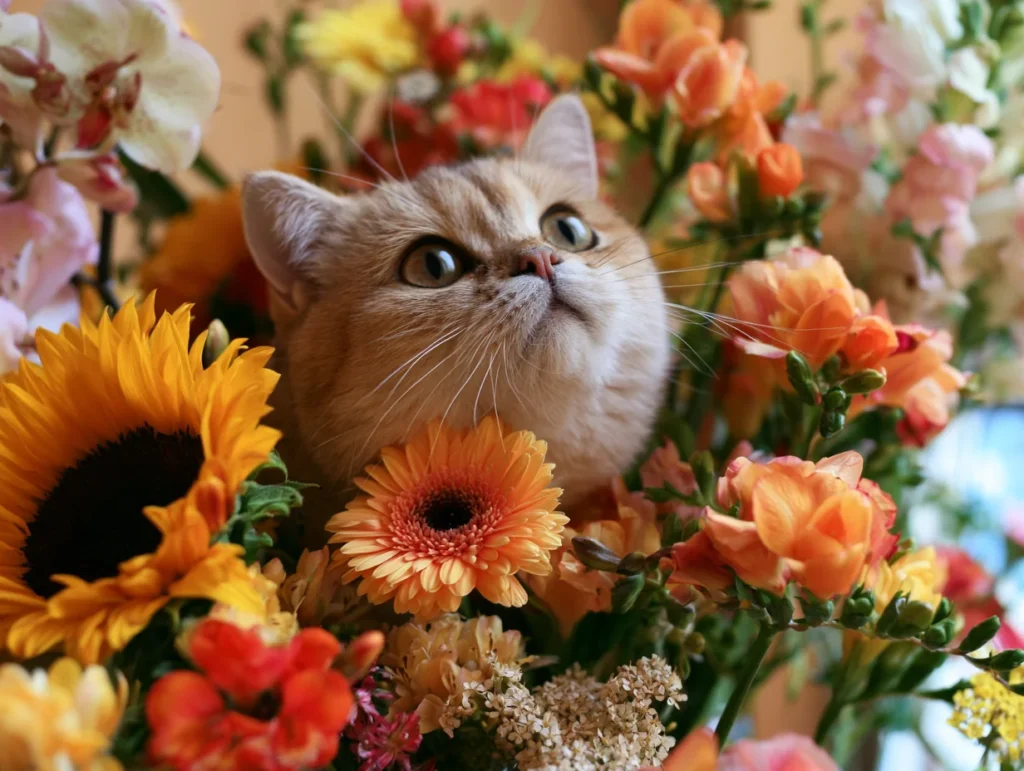
Bouquet fillers deserve the same attention as the main flowers when a cat is in the home. Small accent blooms and foliage may occupy much of an arrangement, and a cat-safe primary flower does not guarantee that every stem is suitable. Freesia, statice, and wax flower are attractive, generally cat-safe choices that can add color, structure, and visual interest without overwhelming larger blooms. However, plant safety can depend on the exact species, so ask the florist to confirm each plant’s identification before bringing an arrangement indoors.
Freesia produces delicate, fragrant blooms in a range of colors, making it useful for adding softness between larger flowers. Its slender stems and graceful flowers can create a light, refined appearance in both casual and formal bouquets. Statice has distinctive papery flowers that hold their shape well, even as an arrangement ages. It adds texture and long-lasting color, and its sturdy form can provide contrast alongside rounded or richly layered blooms.
Wax flower is recognized by its tiny, star-like blossoms carried on branching stems. These branches create an airy, spreading effect, helping a mixed bouquet look fuller without appearing crowded. Although these fillers are commonly regarded as cat-safe, common names may vary between florists and regions. A substitute species may be included if a particular flower is unavailable, so checking the label or requesting the botanical name is a sensible precaution.
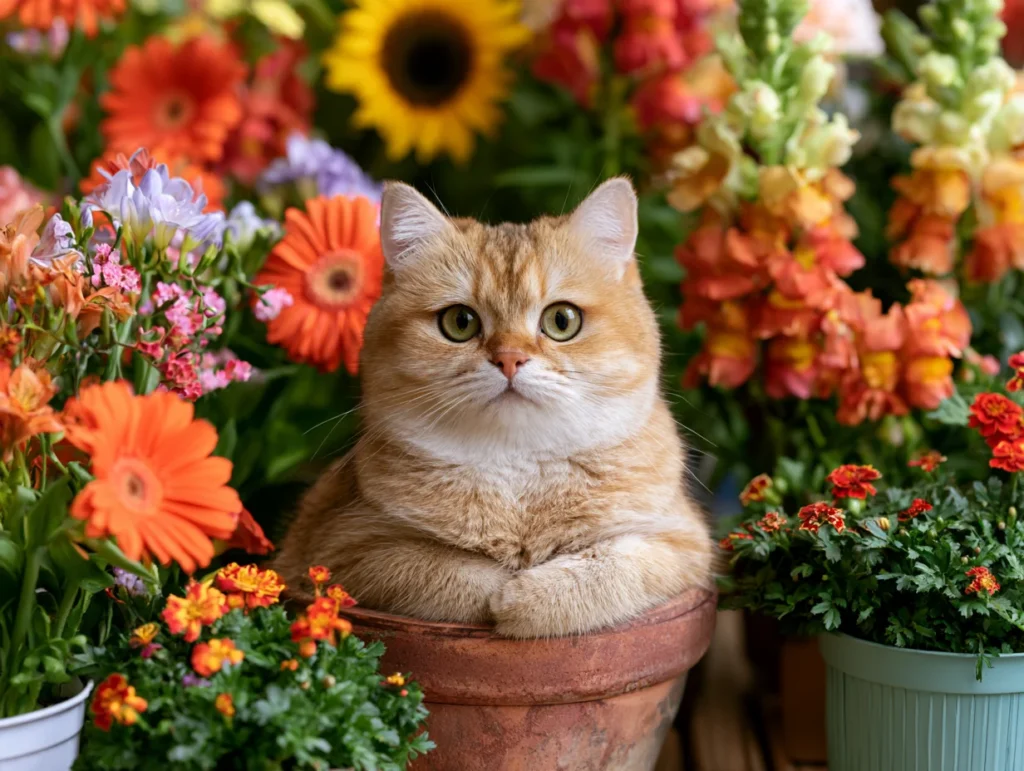
Before placing any bouquet where a cat can reach it, remove florist foam, ribbons, wires, tape, and other decorative pieces that could be chewed or swallowed. Do not let cats drink vase water containing floral preservatives, and change the water regularly to reduce bacterial growth. Keep the arrangement clean, and discard flowers or foliage showing mold, decay, or heavy pesticide residue. Even non-toxic plants can cause stomach upset if eaten in large amounts, so monitor curious cats and contact a veterinarian if illness develops.
Spider plants and African violets are practical choices for households that share space with cats. Spider plants are resilient and adaptable, with arching green-and-white leaves that add movement and texture to a room. They can be displayed in hanging baskets or placed on sturdy shelves, although their dangling foliage may attract a curious cat that wants to chew. Positioning the plant out of reach can reduce this temptation while still allowing it to receive suitable light.
African violets are compact, making them especially useful for windowsills, apartments, and smaller rooms. Their colorful blooms provide visual interest without requiring much space. Place them in bright, indirect light, and avoid overwatering, since constantly wet soil can damage the roots and encourage other plant-health problems. Both spider plants and African violets are generally listed as non-toxic to cats, but they should still be treated as plants rather than snacks. Eating a large amount of any plant material may cause gastrointestinal upset, including vomiting or diarrhea.
Choose heavy, stable pots that cannot be easily tipped over, and keep loose potting mix, fertilizer, pesticides, and other plant-treatment products away from pets. Remove dead leaves promptly, and prevent cats from digging in the soil. Before bringing home a new plant, verify its identity and inspect it for toxic companion greenery, decorative additions, or treated soil. A supposedly suitable plant can present a hazard if it is sold alongside unsafe species or has been exposed to products unsuitable for animals.
Author: Coral Spring florist

